
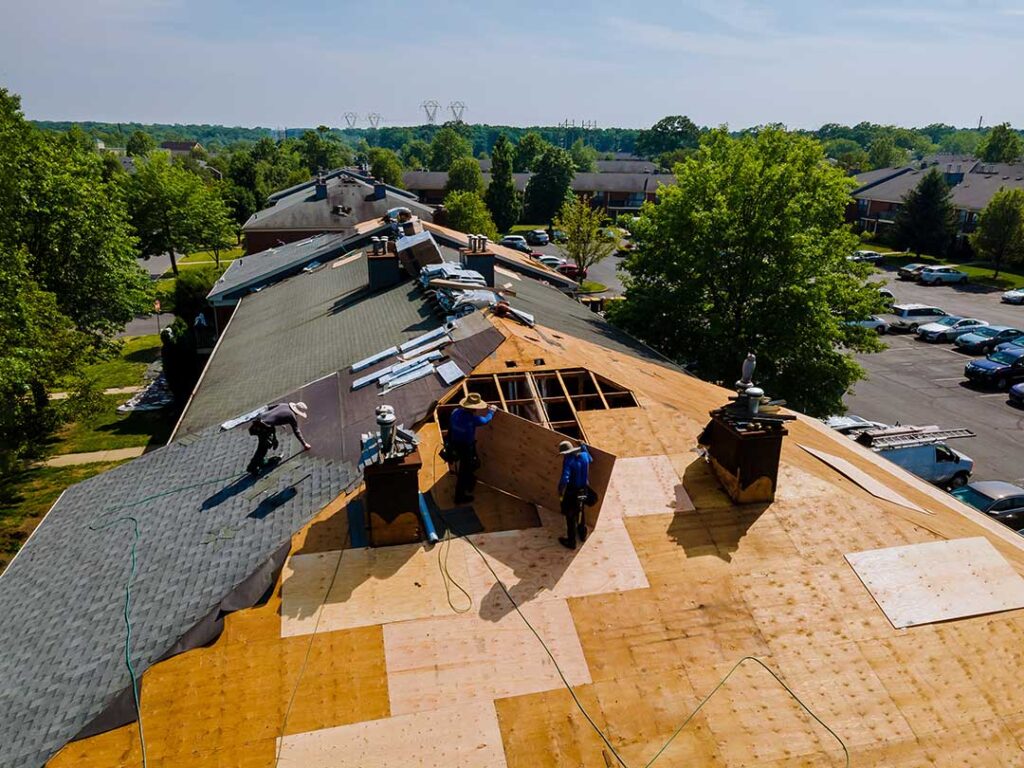
What counts as a roofing emergency?
A roofing emergency is damage that allows water, wind, or debris to threaten the building’s interior or occupants. Active leaks, a section of roof torn away, a collapsed area, exposed electrical equipment, and large tree impacts usually require prompt action.
Not every roof problem must be repaired immediately. A few missing shingles with no visible moisture may be temporarily manageable, while water entering a ceiling cavity can worsen quickly. The main question is whether the damage is allowing water into the structure or creating an immediate safety hazard.
Common emergency situations include:
- Water dripping through a ceiling or wall
- A ceiling that is sagging, stained, or bulging
- Roofing materials scattered after high winds
- A puncture from a fallen branch
- Ice-related damage around roof edges or drainage areas
- A partial roof collapse
- Daylight visible through the roof or attic
- Loose materials that could fall onto people or property
In Albion, NY, roofs may face heavy rain, freezing temperatures, snow accumulation, strong wind, and rapid changes between wet and cold conditions. Those weather shifts can turn a small opening into a more serious leak.
What should happen first after roof damage?
The first priority is protecting people, followed by limiting interior damage. Do not climb onto the roof during rain, high winds, lightning, snow, or icy conditions.
Inside the building, move furniture, electronics, rugs, and other belongings away from the leak. Place containers under drips, but do not stand beneath a visibly sagging ceiling. A bulging ceiling may contain a large amount of water and could fail without warning.
If water is near light fixtures, outlets, appliances, or wiring, avoid touching the affected area. If it can be done safely without entering a wet area, shut off power to the affected circuit. Electrical concerns should be treated as urgent because water and wiring create a risk of shock or fire.
If a ceiling begins to bow significantly, leave the room and keep children and pets away. Do not puncture the ceiling to release water unless directed by a qualified emergency responder who has assessed the situation.
How can a homeowner reduce damage temporarily?
Temporary protection should be performed from the ground or from a safe interior location whenever possible. The goal is to limit water entry until permanent repairs can be completed.
Useful short-term steps may include:
- Covering belongings with plastic sheeting while keeping electrical devices away from moisture
- Placing buckets or storage containers beneath active drips
- Recording where water appears inside the building
- Closing doors to affected rooms to limit access
- Clearing indoor pathways so people do not slip or trip
- Photographing visible damage from a safe position
- Checking the attic only if it can be reached safely and there are no electrical or structural concerns
A tarp can sometimes reduce additional water entry, but roof access is hazardous. Wet shingles, steep slopes, hidden damage, and unstable materials make emergency roof work especially risky. Improvised methods such as walking on damaged sections, placing tarps over power lines, or using ladders on icy ground can create more danger than the original leak.
Should the roof be covered during an emergency?
A temporary covering may help keep rain and melting snow out, but it must be installed correctly and secured for the expected weather. A loose tarp can tear, trap water, damage siding, or become airborne during strong wind.
Roof coverings should not be placed over unstable decking, exposed electrical equipment, or areas affected by structural collapse. Tarp installation also becomes more difficult when the roof is wet, snow-covered, or heavily damaged. If the roof cannot be reached without climbing or balancing on an unsafe surface, leave the exterior alone and focus on interior protection.
A temporary covering is not a permanent repair. It does not replace replacing missing materials, sealing openings, repairing damaged flashing, or evaluating wet insulation and roof decking.
What should be documented after storm damage?
Photographs and written notes can help explain what happened and show how the damage progressed. Documentation is especially useful when damage is not obvious from the ground.
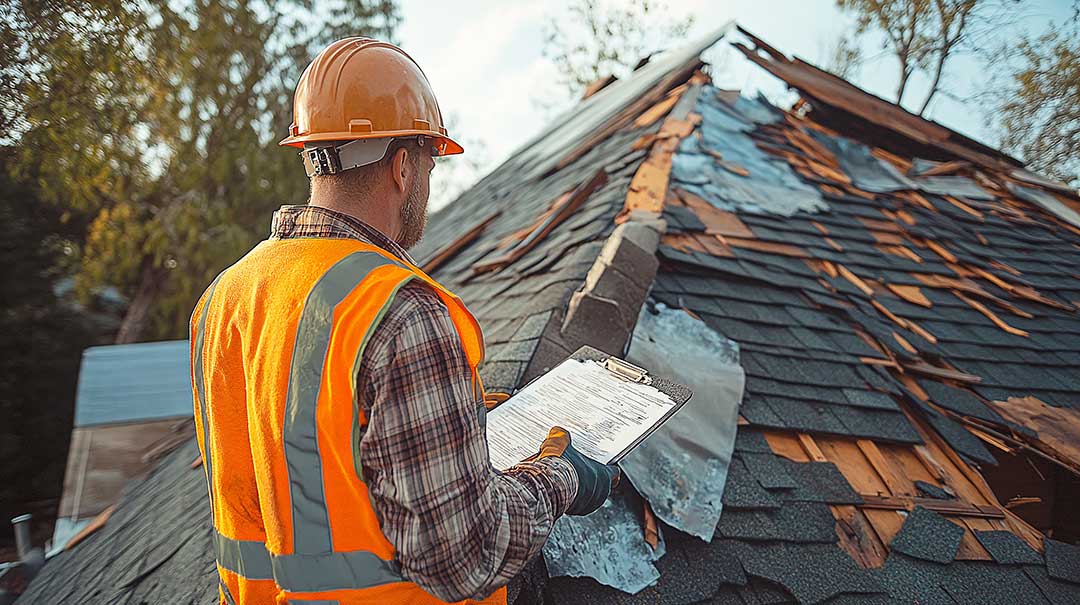
Take pictures of:
- The roof area, if visible safely from ground level
- Fallen branches, missing materials, or nearby debris
- Interior stains, drips, and damaged ceilings
- Wet insulation, flooring, drywall, or personal property
- Water locations before and after temporary protection
- Any emergency measures already taken
Include the date and approximate time of the storm or discovery. Keep receipts for reasonable emergency supplies and note any rooms that cannot be used. Avoid throwing away damaged materials until they have been documented, unless they create a health or safety hazard.
Documentation should remain factual. A roof may appear damaged after a storm, but the cause could involve wind, falling debris, ice, age-related deterioration, or a combination of conditions. Clear records are more useful than assumptions.
What emergency roof problems are easy to overlook?
A small ceiling stain does not always mean the roof opening is directly above it. Water can travel along rafters, roof decking, insulation, plumbing penetrations, or framing before appearing inside. The visible drip may therefore be several feet away from the original entry point.
Attic moisture can also remain hidden. Wet insulation, darkened wood, damp sheathing, and musty odors may indicate a leak that is not actively dripping at the moment. In cold weather, moisture can freeze and then reappear during a thaw.
Roof edges and drainage details deserve attention after storms. Clogged or damaged gutters, blocked valleys, displaced flashing, and ice buildup can redirect water behind exterior materials. If water is entering near a chimney, vent, skylight, wall intersection, or roof edge, the visible opening may not identify the full source.
A roof that stops leaking after the weather clears is not necessarily repaired. Water may have entered insulation or decking and could cause staining, swelling, mold growth, or decay later.
When is emergency help necessary?
Emergency assistance is warranted when the roof is structurally unstable, a large area is open to weather, water is near electrical systems, a tree or major limb has struck the building, or occupants cannot safely enter part of the home.
Roof work should not be attempted by someone who lacks safe access equipment, fall protection, or experience working around damaged structures. Steep roofs, icy surfaces, hidden holes, and wind-loaded materials can make conditions unpredictable.
If a fallen tree, major collapse, or electrical hazard is involved, stay clear of the area and follow instructions from appropriate emergency authorities. Do not enter a damaged structure until it is reasonably safe to do so.
Once immediate risks are controlled, the roof still needs a careful evaluation. Temporary measures can stop water for a short period, but lasting repairs depend on identifying the source, checking the underlying materials, and confirming that the roof and supporting structure remain sound.
How can emergency roof damage be reduced before the next storm?
Routine observation can reduce the severity of future emergencies. From the ground, look for curled or missing shingles, sagging roof lines, loose flashing, damaged vents, overflowing gutters, and branches touching the roof. Keep drainage paths clear where it can be done safely from the ground.
Inside, inspect ceilings and upper walls for new stains, peeling paint, damp odors, or recurring discoloration. After major wind or snow events, check these areas again even if no leak is immediately visible.
Homes in the area may experience repeated freeze-and-thaw cycles, so small defects can become more noticeable after winter weather. Prompt attention to minor openings, blocked drainage, and loose materials can help prevent a manageable issue from becoming an interior emergency.
