
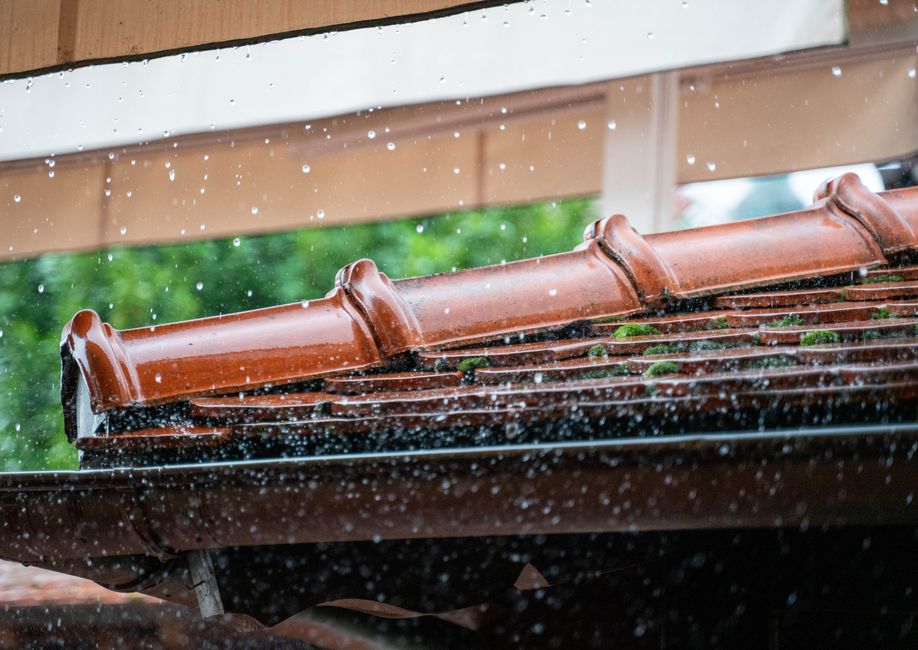
Why do clean gutters matter to a roof?
Clean gutters help move rainwater and melting snow away from the roof, walls, foundation, and surrounding soil. When gutters are blocked, water can collect along the roof edge, spill over during storms, and remain against roofing materials longer than intended.
For homes in Albion, NY, regular gutter cleaning is especially useful because roofs and drainage systems must handle changing seasonal conditions. Spring rain, summer thunderstorms, autumn leaves, and winter snow and ice can all affect how well gutters function.
Gutter cleaning is not only about appearance. It is a basic part of protecting the roof system from moisture-related damage.
How can clogged gutters damage roofing materials?
A clogged gutter may cause water to back up under the lower edge of the roof. This area, often called the roof edge or eave, is designed to shed water into the gutter. If water cannot drain away, it may soak roofing components that are normally kept relatively dry.
Possible problems include:
- Deterioration of roof decking near the eaves
- Rotting or weakened fascia boards
- Damage to soffits and trim
- Staining or decay beneath the roof edge
- Loosened gutters and damaged fasteners
- Leaks that appear inside the attic or upper walls
Water does not always produce an obvious interior leak right away. A roof may continue to look normal from the ground while moisture gradually weakens wood beneath the shingles or near the gutter line.
Can overflowing gutters cause roof leaks?
Yes. Overflowing gutters can contribute to roof leaks, although the exact cause depends on the roof design, gutter condition, and location of the blockage.
A common problem occurs when leaves, twigs, roof granules, or sediment restrict the flow of water. During heavy rain, the gutter fills faster than it can drain. Water may then spill over the back edge, run down the fascia, or collect near roof penetrations and corners.
Overflow is more likely at:
- Inside and outside corners
- Downspout openings
- Areas below roof valleys
- Low sections of a sloped roof
- Places where nearby trees drop leaves or small branches
Gutter overflow does not automatically mean the roof itself has failed. It may indicate a drainage problem that should be corrected before moisture causes secondary damage.
Why are roof edges vulnerable?
The lower edge of a roof receives concentrated runoff. Water flowing across the shingles gathers near the eaves before entering the gutter. When the gutter is obstructed, that concentrated flow has few places to go.
Roof edges are also exposed to repeated wetting and drying. Wood components may swell when wet and contract as they dry. Over time, this movement can contribute to splitting, softening, paint failure, and weakened connections.
In cold weather, trapped water may freeze. Ice can add weight to the gutter, pull it away from the fascia, or contribute to ice buildup along the roof edge. Freezing conditions can also make small drainage problems more serious because water cannot move freely through partially blocked outlets.
How do gutters affect attic moisture?
Gutters do not ventilate an attic, but their condition can influence moisture near the roof perimeter. If water is repeatedly pushed against the roof edge, it may enter areas near the fascia, soffit, or attic insulation.
Moisture in these locations can contribute to:
- Damp or compressed insulation
- Mold growth on persistently wet surfaces
- Wood decay
- Musty odors
- Reduced energy performance if insulation becomes wet
Not every attic moisture problem comes from gutters. Poor ventilation, indoor humidity, roof leaks, and air leakage can also play a role. Still, blocked gutters are a relatively common exterior source of water near the roofline and should not be overlooked.
How often should gutters be cleaned?
Many homes need gutter cleaning at least twice each year: once in late spring and again after most autumn leaves have fallen. Some properties require more frequent attention if they have mature trees, a steep roof, large amounts of roof debris, or a history of overflow.
A practical schedule may include:
- Spring cleaning after winter debris has cleared
- Midseason inspection during periods of heavy leaf drop
- Late autumn cleaning before sustained freezing weather
- Additional checks after major windstorms
The right schedule depends on the property. A home with few nearby trees may need less frequent cleaning, while a house beneath dense branches may develop blockages quickly.
What should residents look for besides leaves?
Leaves are easy to notice, but other warning signs may be more significant. A gutter can appear mostly clean while still draining poorly because of a compacted layer of sediment or a blocked downspout.
Look for:
- Water spilling over the front during rain
- Gutter sections pulling away from the fascia
- Sagging or uneven channels
- Rust holes, cracks, or separated joints
- Soil erosion beneath downspouts
- Water stains on fascia or siding
- Peeling paint near the roof edge
- Shingle granules collecting in the gutter
- Standing water after a storm
Shingle granules are normal in small amounts, especially on newer roofs, but a heavy or increasing accumulation may indicate roof wear. Gutter cleaning provides an opportunity to notice this material before it washes away.
Is gutter cleaning safe to do from a ladder?
Gutter cleaning can involve significant fall risk. Ladders may be placed on uneven ground, wet grass, ice, or sloped surfaces. Reaching sideways can also cause a loss of balance, and gutters may not support a person’s weight.
Extra caution is necessary around:
- Two-story sections
- Steep or slippery roofs
- Overhead electrical lines
- Snow and ice
- Weak, loose, or rotted fascia
- Unstable ladder footing
- Hidden structural damage
If the gutter is attached to deteriorated wood, attempting to pull out debris may make the damage worse. Hazardous conditions are a reason to avoid climbing and use a safer inspection method or qualified assistance.
Do gutter guards eliminate cleaning?
Gutter guards can reduce the amount of leaves and larger debris entering a gutter, but they do not make the system maintenance-free. Fine seeds, roof grit, pine needles, and small particles may still collect on or beneath the guard. Some designs can also become difficult to inspect once debris builds up on top.
A guarded gutter should still be checked for:
- Blocked openings
- Poor water flow
- Debris accumulation
- Loose sections
- Downspout obstructions
- Water overflow during rain
The purpose of a guard is to reduce maintenance, not remove the need for observation.
What is the connection between gutter cleaning and winter roof care?
Clean gutters allow autumn rain and early snowmelt to drain before freezing temperatures become persistent. A blocked gutter can hold wet debris and water, increasing weight along the roof edge and making ice-related problems more likely.
Before winter, it is useful to confirm that:
- Gutters are free of compacted debris
- Downspouts direct water away from the foundation
- Gutter sections are securely attached
- No water stains or soft wood are visible near the eaves
- Roof valleys and edges are not collecting excessive debris
Cleaning gutters does not prevent every ice dam. Roof insulation, air sealing, ventilation, weather conditions, and roof geometry also affect ice formation. However, clear drainage removes one avoidable source of winter water trouble.
How does proper drainage protect more than the roof?
Gutters are part of a larger water-management system. Downspouts should carry water far enough away from the foundation to prevent repeated pooling beside the house. If water is released directly against the foundation, it may contribute to damp basements, soil erosion, or settlement near the building.
A roof can remain in good condition while poor drainage causes damage elsewhere. For that reason, gutter maintenance should include checking where the water ends up, not just whether the gutter channel looks clean.
Regular inspections, timely cleaning, and attention to early warning signs help preserve the roof edge and reduce the chance that a minor drainage problem becomes hidden structural damage.
